Course Description
A two-day, hands-on program
A hands-on course in technique, cosmesis, and complication avoidance — observe patient counseling and procedures in the office, then spend a full day in the OR.
Thursday — In the office
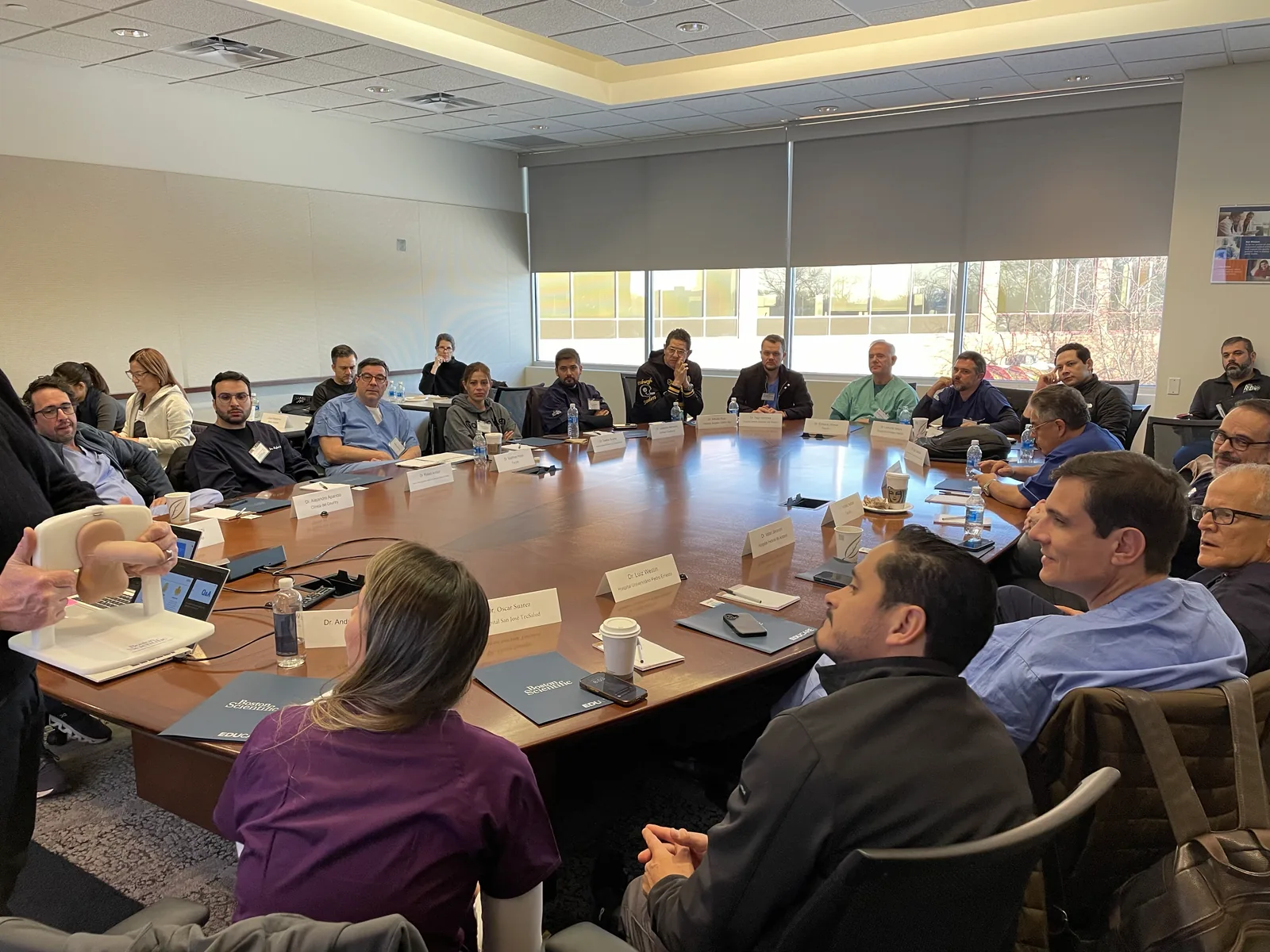
Urologists spend Thursday in the office and observe how to counsel patients interested in penile implant surgery. They can observe penile Dopplers and Rezum procedures, and receive a lecture by Dr. Gheiler. Dinner follows with a Q&A session.
Friday — In the OR
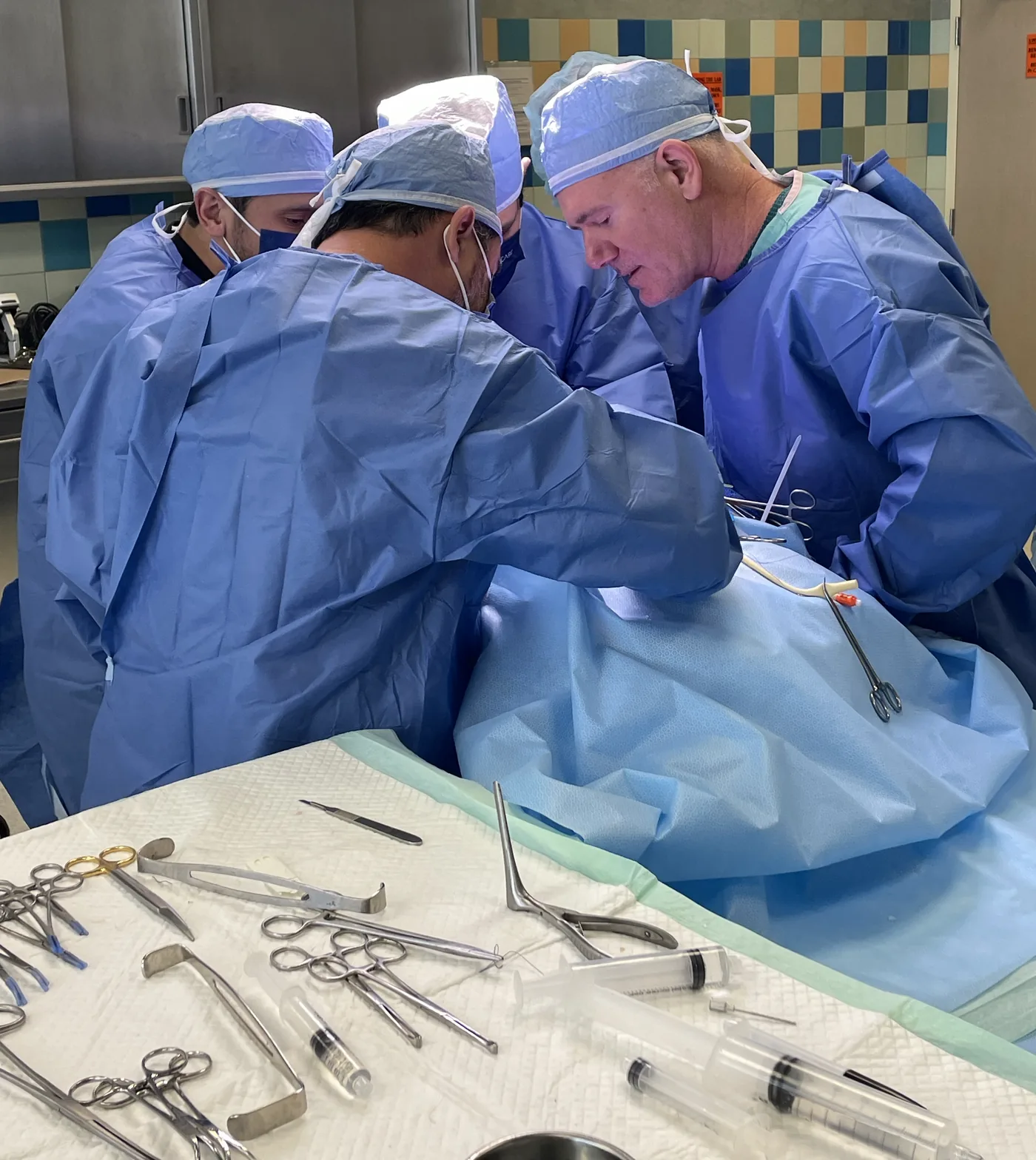
Friday is an OR session. We typically perform between 4–10 penile implants that day. Urologists are taught Dr. Gheiler’s scrotal penile implanting techniques, plus multiple pearls developed over 20+ years and more than 8,000 prosthetic-urology cases. Pain prevention and infection prevention techniques are discussed throughout.

Your instructor
Dr. Edward Gheiler, MD, FACS
Dr. Gheiler is a board-certified urologist, a Fellow of the American College of Surgeons, and the director of this masterclass. He has been placing penile implants in practice since 2000, with more than 8,000 prosthetic-urology cases and approximately 400 inflatable penile implant procedures per year, and has been designated by Boston Scientific as an AMS 700 Center of Excellence. His patient practice is Happy Urology in Hialeah / Miami, Florida.
Why this program
Live cases, not cadaver models
Rather than practicing on cadaver models, attendees train hands-on in a working operating room with live inflatable penile implant surgery — typically 4–10 real cases in a single day — along with the patient counseling, cosmesis decisions, and complication management that surround each case. The technique is taught on the Boston Scientific AMS 700; the principles transfer across inflatable implant systems.
Inside the OR session
The 37-step penile implant masterclass
Dr. Gheiler walks through every phase of the case — from an infection-prevention setup to pump placement — across eight modules, including 12 real-world pitfalls and how to avoid them.
A summary of the teaching agenda for attending urologists — professional education, not clinical guidance or a recommended protocol; techniques reflect Dr. Gheiler’s practice and individual clinical judgment applies.
ISterility & Infection Prophylaxis2 steps
- 1Infection-Prevention Setup — No Linen
An all-disposable, no-linen room setup to reduce contamination.
- 2Antibiotic Prophylaxis
Selection and timing of preoperative antibiotic prophylaxis.
IIPositioning, Prep & Anesthesia5 steps
- 3Positioning: Flex + Slight Trendelenburg
Maximal proximal corporal access; lets you drape, wash and prep the crevices better.
- 4Skin Prep 1 — Hibiclens Wash
First wash with chlorhexidine (Hibiclens).
- 5Skin Prep 2 — ChloraPrep (Alcohol)
Then an alcohol-based prep over the field.
- 6Penile Measurements + Local Block
Penile measurements, then a local block with long-acting anesthetic.
- 7Maximal Penile Stretch — Whole Case
Keep the penis on maximal stretch the entire case for easier dissection and more proximal access.
IIIApproach & Incision4 steps
- 8No-Touch Draping — Ioban + Second Glove
No-touch draping with Ioban, then place a second glove.
- 9Mark & Incise — Penoscrotal
- 10Why Not Infrapubic
Why this practice favors the penoscrotal approach, and the scar considerations of each route.
- 11Better Distal Cylinder Seating
The penoscrotal angle lets you seat the distal cylinder further into the glans.
IVCorporotomy, Sizing & Implantation4 steps
- 12Non-Sharp Hooks for Exposure
- 13Furlow Insertion — Go Proximal
No dilation; on the Furlow insertion and measurements, go proximal.
- 14Distal Sizing
- 15Corporotomy Too Distal → 'Chevron' Tubing Pitfall
Not going proximal enough can produce chevron tubing — a cosmetically poor, non-functional result.
VImplant Selection & Cosmesis3 steps
- 16Implant Selection — Device Considerations
- 17Same-Patient Implant Comparison
A same-patient comparison illustrating implant-selection and cosmesis considerations.
- 18SST Deformity — Implant Too Short / Posterior Perforation Pitfall
VIComplications & Revisions7 steps
- 19SST Deformity — Clinical Appearance Pitfall
- 20SST Deformity — Mechanism Pitfall
- 21Too Many Rear Tips Pitfall
- 22Distal Crossover Pitfall
- 23Proximal Crossover Pitfall
- 24'Goal Post' Check for Proximal Perforation
A goal-post check confirms there is no proximal perforation.
- 25Corrected SST Patient
VIIReservoir Placement10 steps
- 26Ectopic Reservoir Placement — Anatomy
- 27Reservoir Spaces — Submuscular / Retropubic
- 28Pelvic Anatomy for Ectopic Reservoir
- 29Ectopic (Submuscular) Reservoir
- 30Reservoir Position on CT
- 31Avoiding a Counter-Incision in Complex Cases
Strategies to avoid a counter-incision, even in complex cases.
- 32Malposition — Intra-abdominal Reservoir Pitfall
- 33Intra-abdominal Reservoir → Bowel Obstruction Pitfall
- 34Reservoir Eroding into Bladder Pitfall
- 35Subcutaneous Reservoir Malposition Pitfall
VIIIPump Placement2 steps
- 36Proper Pump Placement — Anterior, Dependent
The pump sits in the anterior, dependent scrotum for concealment and easy operation.
- 37Poor Pump Placement Pitfall
FAQ
About the masterclass
- What is Dr. Gheiler's IPP Surgical Masterclass?
- A hands-on course in which Dr. Edward Gheiler, MD, FACS — designated a Boston Scientific AMS 700 Center of Excellence, performing approximately 400 inflatable penile implant procedures a year — teaches practicing urologists his scrotal AMS 700 technique, placed through a single hidden incision in the scrotal fold and designed to leave a concealed, minimally visible scar, across an eight-module, 37-step curriculum covering technique, cosmesis, and complication avoidance.
- Who teaches the masterclass?
- Dr. Edward Gheiler, MD, a board-certified Miami urologist and Fellow of the American College of Surgeons (FACS), designated by Boston Scientific as an AMS 700 Center of Excellence. He performs approximately 400 inflatable penile implant procedures per year and teaches the AMS 700 procedure to other surgeons.
- What does the masterclass cover?
- Eight modules and 37 steps: sterility and infection prophylaxis; positioning, prep and anesthesia; approach and incision; corporotomy, sizing and implantation; implant selection and cosmesis; complications and revisions; reservoir placement; and pump placement — including real-world pitfalls and how to avoid them.
- What is the concealed-scar scrotal technique?
- Dr. Gheiler places the AMS 700 inflatable implant through a single hidden incision in the upper lateral scrotum along the natural rugae, designed so the scar is concealed and minimally visible once healed. It is the approach taught in the masterclass.
- Is the masterclass specific to the AMS 700?
- The masterclass teaches Dr. Gheiler’s technique on the Boston Scientific AMS 700 inflatable penile prosthesis. The principles taught — sterility and infection prevention, sizing, cosmesis, reservoir and pump placement, and complication avoidance — apply across inflatable penile implant systems.
- How does the masterclass differ from a cadaver-based industry course?
- Rather than practicing on cadaver models, attendees train hands-on in a working operating room with live inflatable penile implant surgery — typically 4–10 real cases in a single day — along with the patient counseling, cosmesis decisions, and complication management that surround each case.
- Who is the masterclass for, and how is it arranged?
- Practicing urologists building or refining an inflatable penile implant practice. Training is usually individual or in pairs, and larger groups are accommodated for physicians traveling from outside the country. Training is coordinated through your local Boston Scientific implant representative.
- How many surgeons has Dr. Gheiler trained?
- More than 250 urologists. Dr. Gheiler has trained roughly 30 urologists a year through this masterclass for the better part of a decade, and for the past three years has trained roughly 20 more each year as faculty of Boston Scientific's annual Latin America course in Minneapolis.
- Is the masterclass a CME program? Do attendees receive a certificate?
- The masterclass is not a CME program. Certificates of completion are available through Boston Scientific when required.
- How long is the masterclass and where is it held?
- It is a two-day program based in South Beach, Miami. Thursday is spent in the office observing patient counseling, penile Dopplers, and Rezum procedures, followed by a lecture and a dinner Q&A; Friday is a full day in the OR.
- How many cases does the OR day include?
- The Friday OR session typically includes 4–10 inflatable penile implant procedures in a single day. On the Thursday office day you also observe patient counseling for implant surgery, penile Dopplers, and Rezum procedures.
- How is training arranged and what does it cost?
- Training programs are coordinated through your local Boston Scientific implant representative — ask your rep about scheduling a visit, or contact us through this site to discuss arrangements.
Training programs should be coordinated through your local Boston Scientific implant representative. Training materials can be reviewed from this website both prior to and after course attendance.